The rules of Antao
What every card does, how a turn goes, and how this site reads the places where the rule sheet leaves a question open.
The 47 cards
Nine kinds of card come once in each of the five colors. The Ace and Das Fundament have no color. Color only decides when a card can be thrown; what the card does is the same in every color. The cards show no names, only a mark in the corner.
Orders for the next player
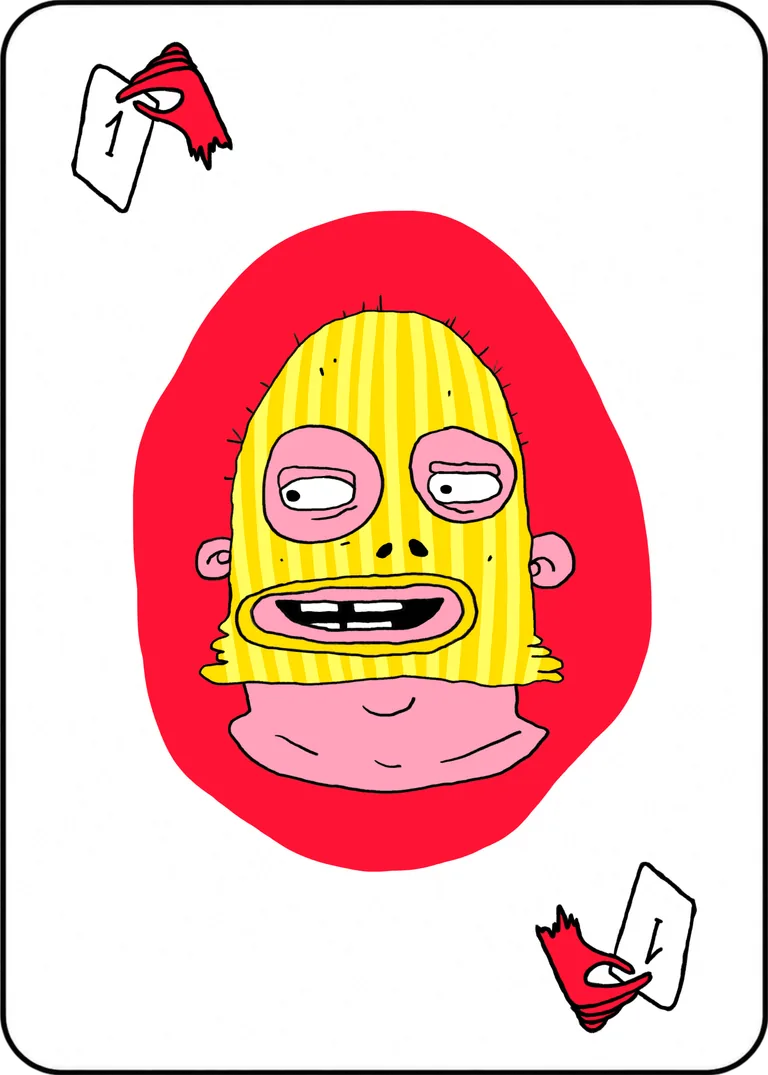
Take One
5 cards, one in each color
The next player must take 1 random card from your hand. You do not show them your cards. This attack can be passed on and stacked.
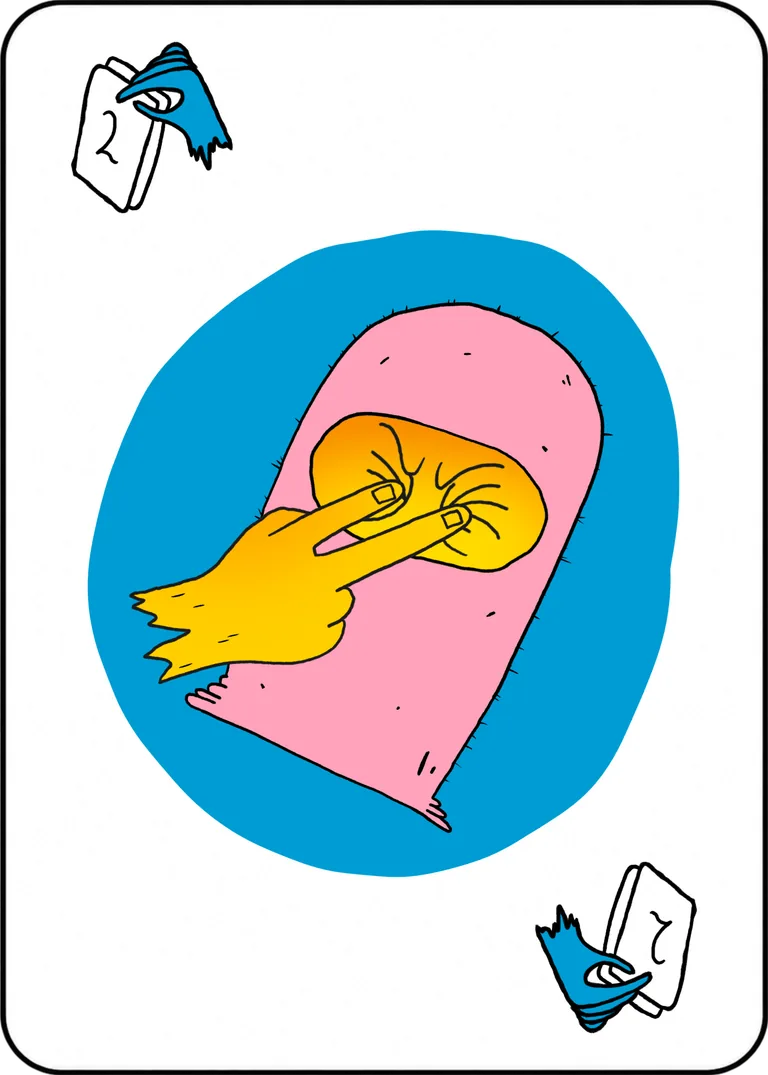
Take Two
5 cards, one in each color
The next player must take 2 random cards from your hand. Works like Take One, but you lose two cards at once. It can be passed on and stacked.
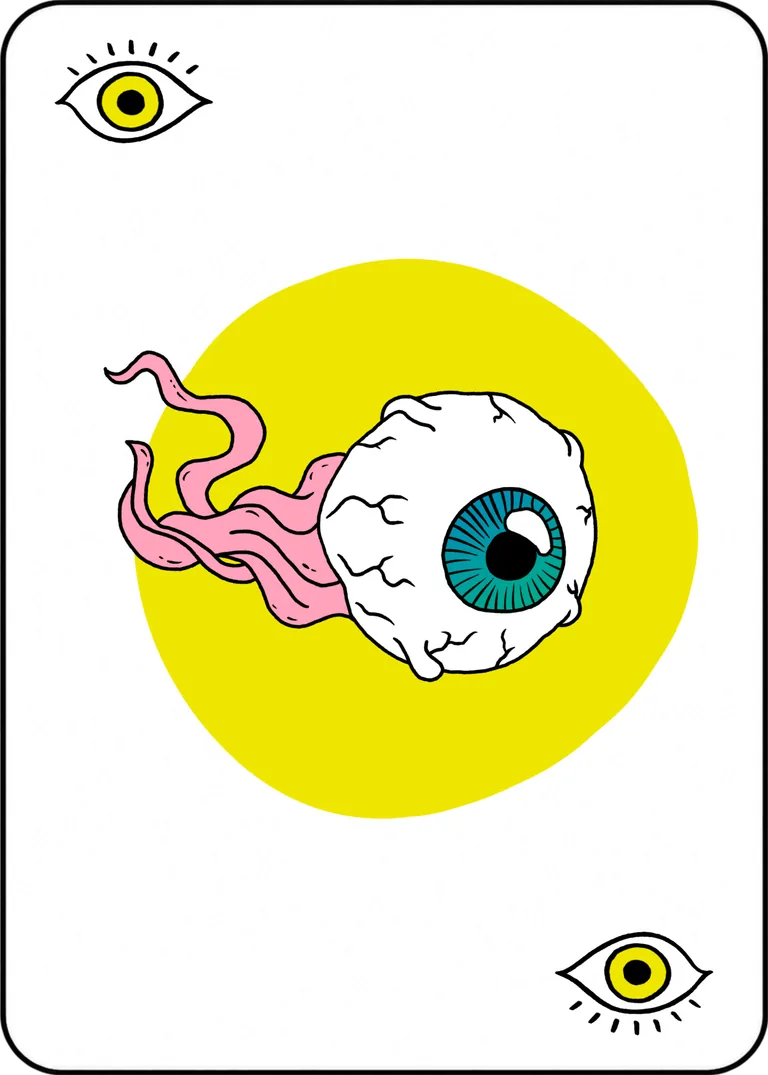
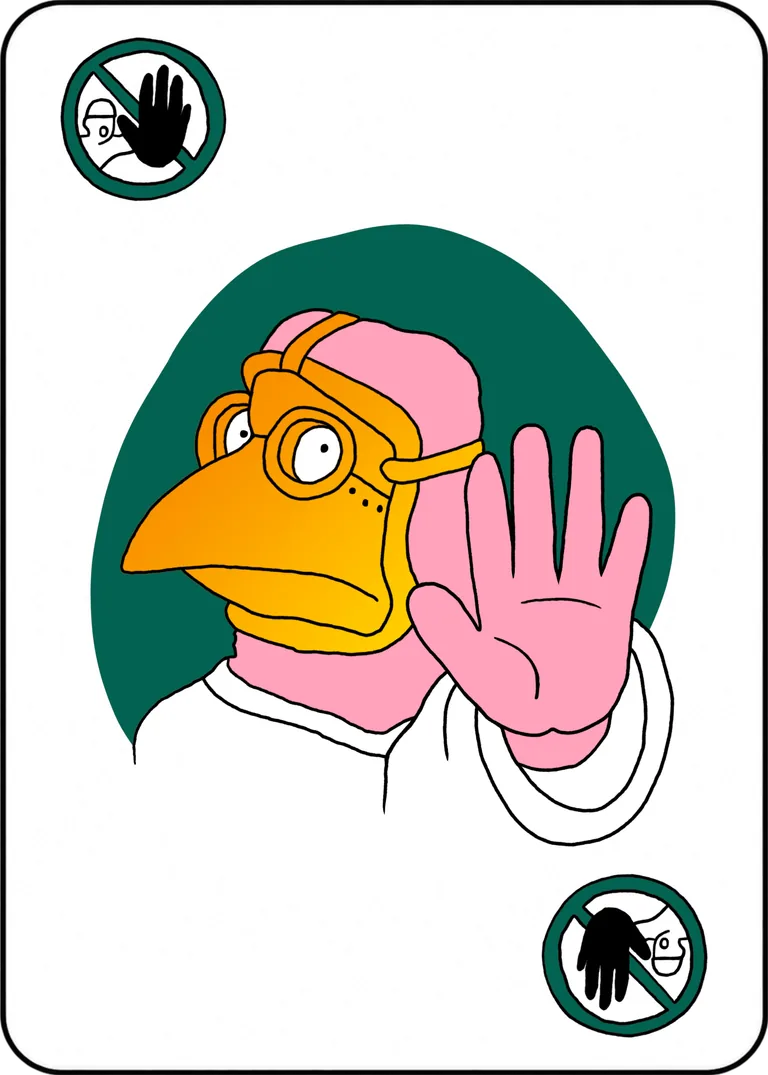
Show
5 cards, one in each color
The next player must show all of their cards to everyone, then throws a card or draws one as on any turn. These cards stay shown; cards drawn or taken later are not. This action can be passed on to the next player.
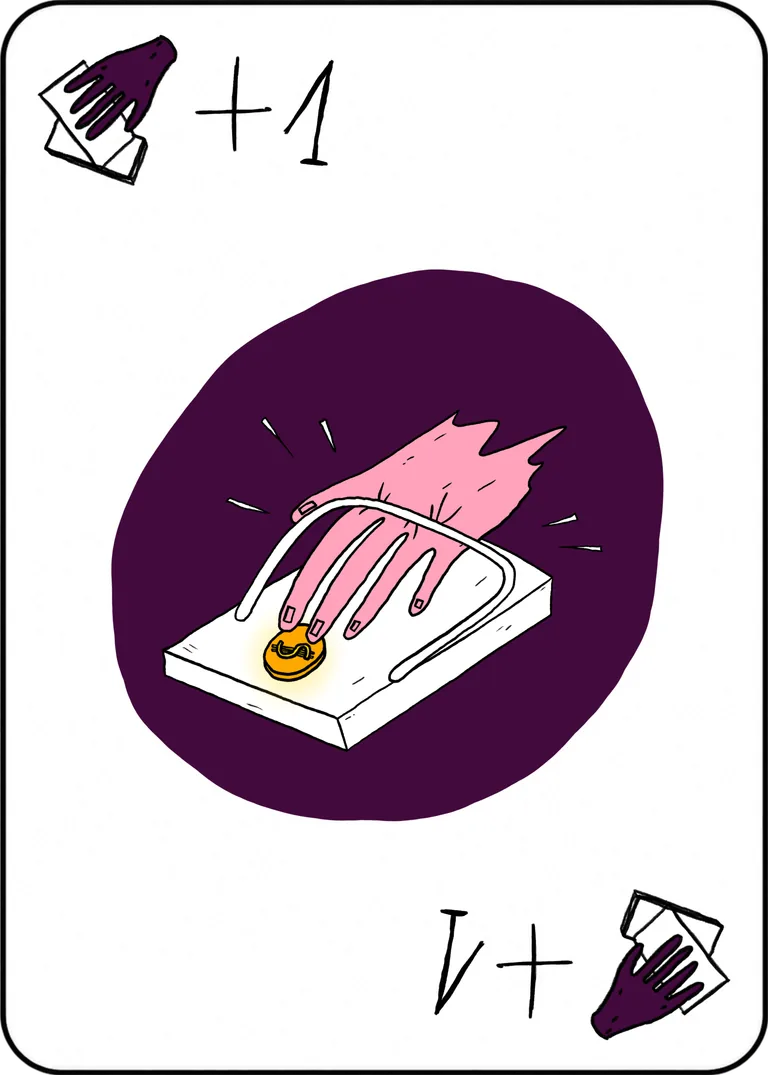
Draw One
5 cards, one in each color
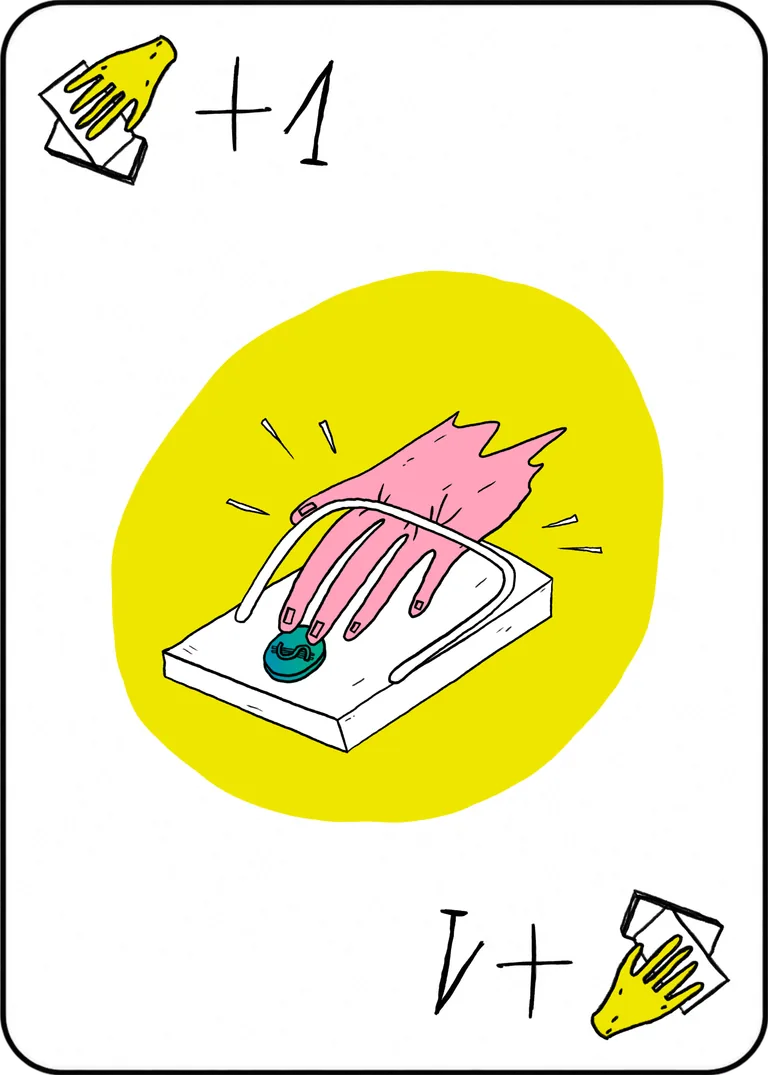
The next player must take 1 card from the draw pile. It can be passed on and stacked.
Draw Two
5 cards, one in each color
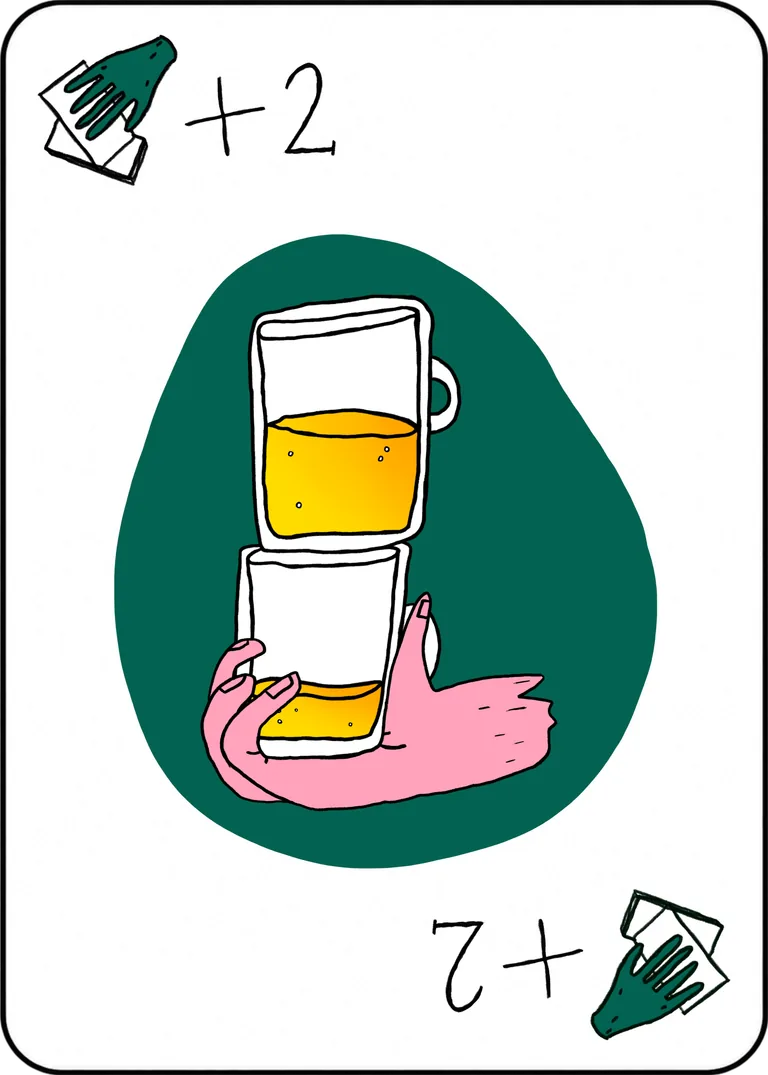
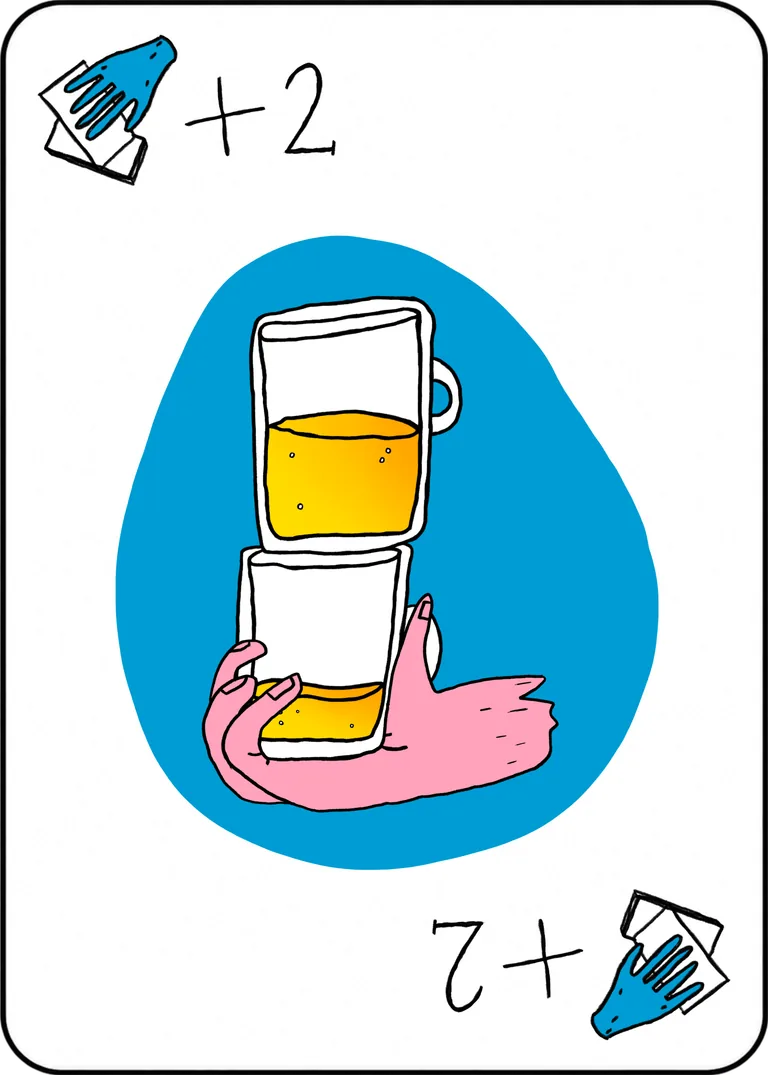
The next player must take 2 cards from the draw pile. It can be passed on and stacked.
Draw Three
5 cards, one in each color
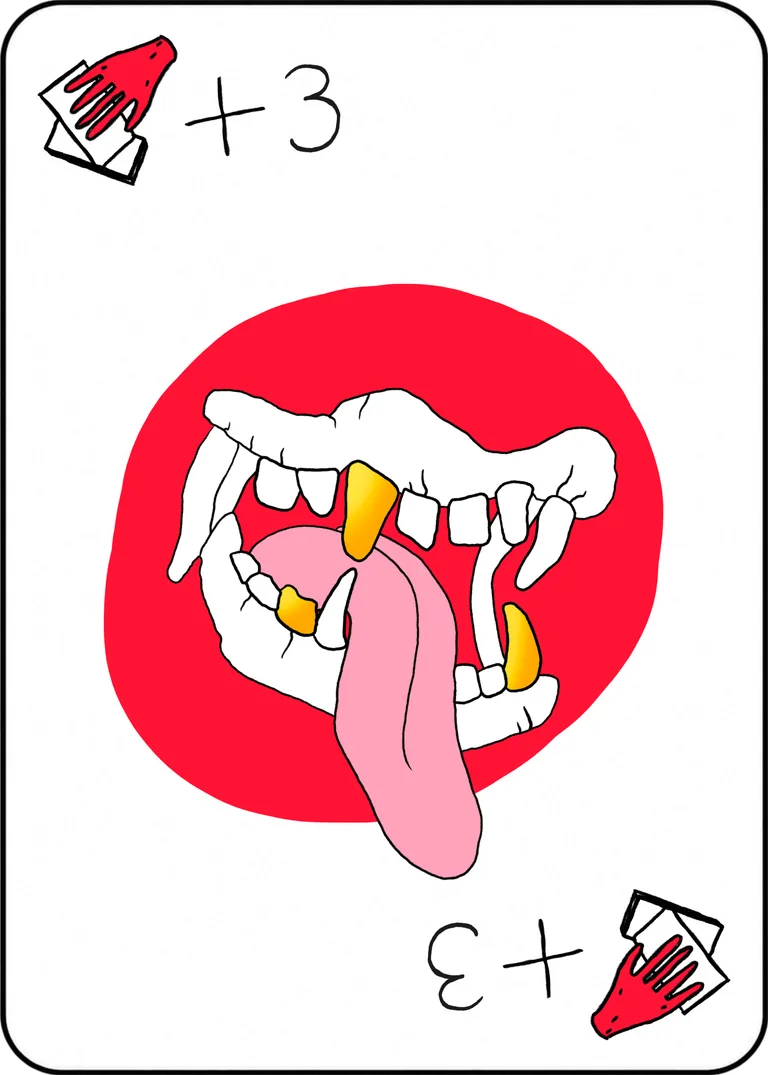
The next player must take 3 cards from the draw pile. It can be passed on and stacked.
Skip
5 cards, one in each color
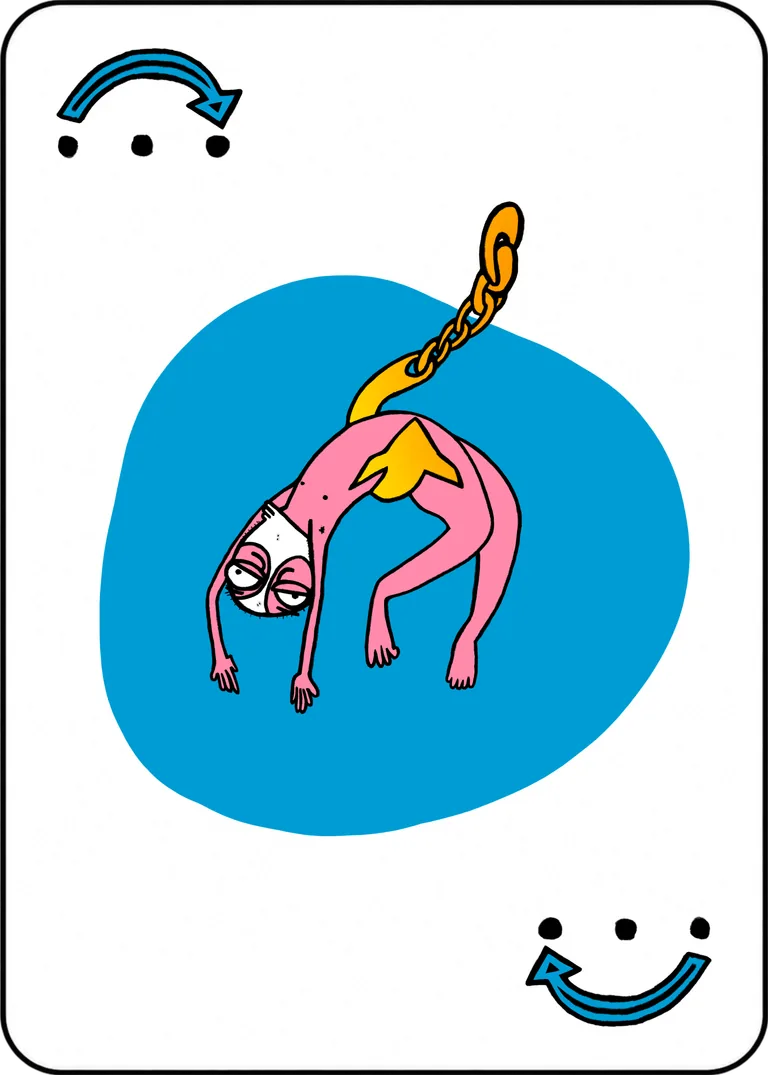
The next player's turn is skipped. Skip cannot be stacked.
Answers
Block
5 cards, one in each color
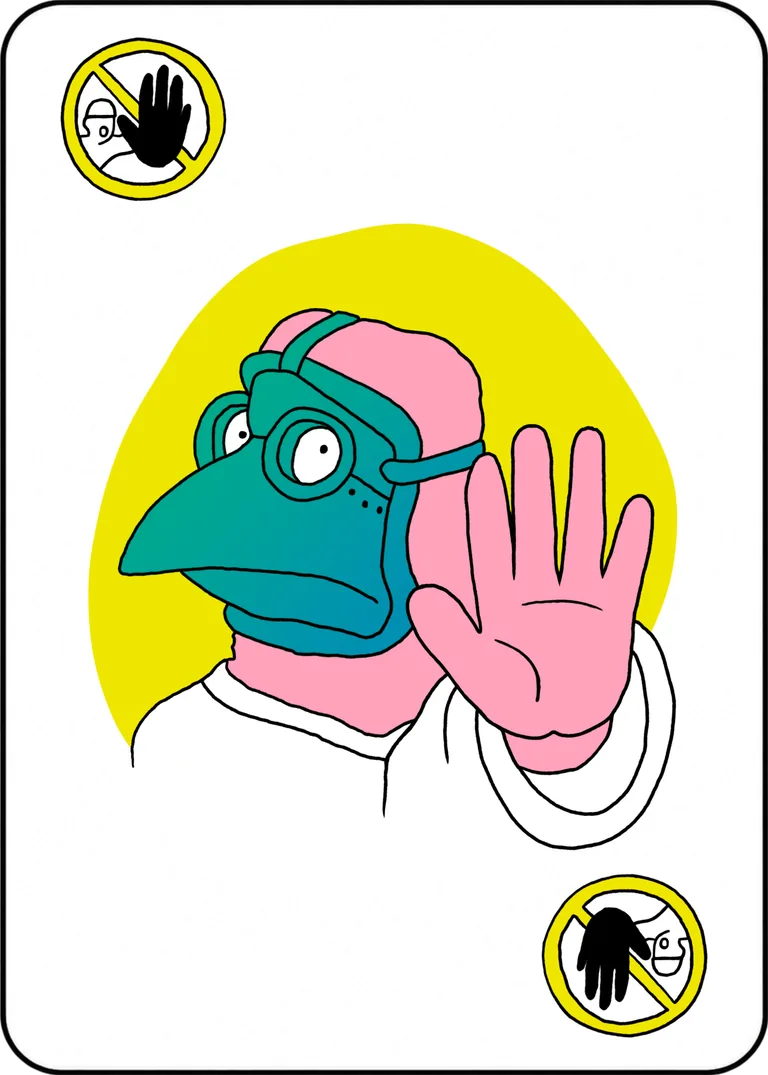
Cancels any incoming attack except Skip. It cannot be stacked or passed on.
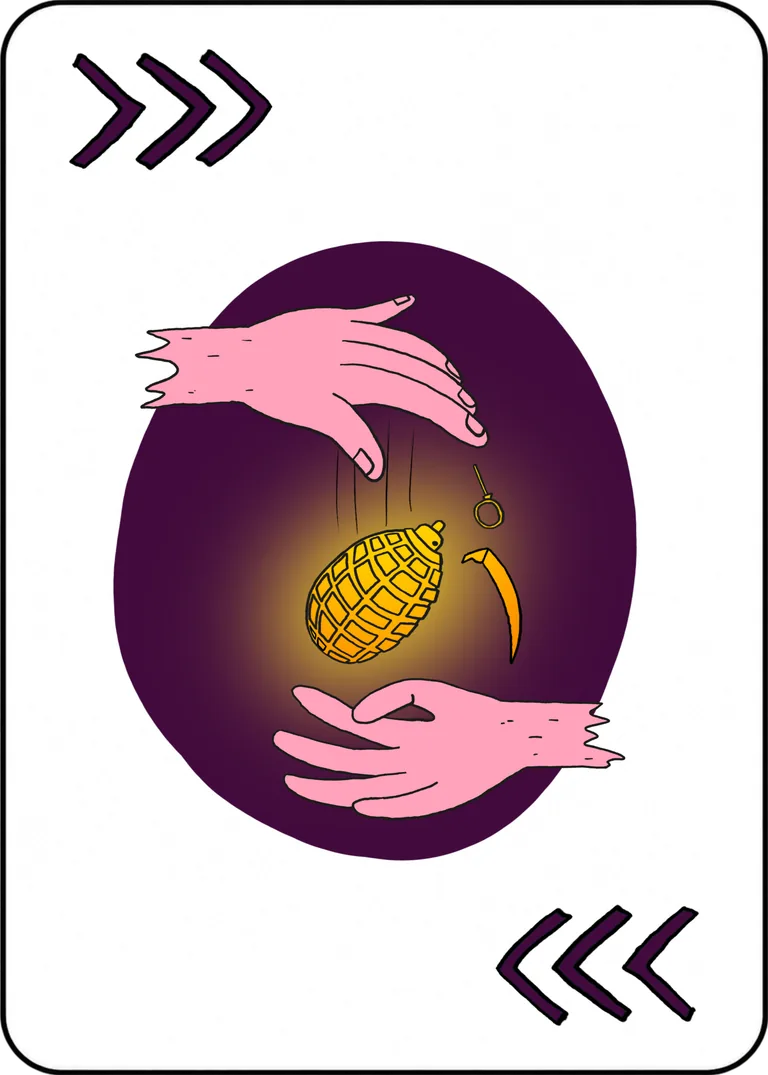
Pass On
5 cards, one in each color
Forward any attack to the next person. The next player can then only pass it on with another Pass On, stop it with Block or Das Fundament, or accept it. On a Take attack, the next player takes from your hand.
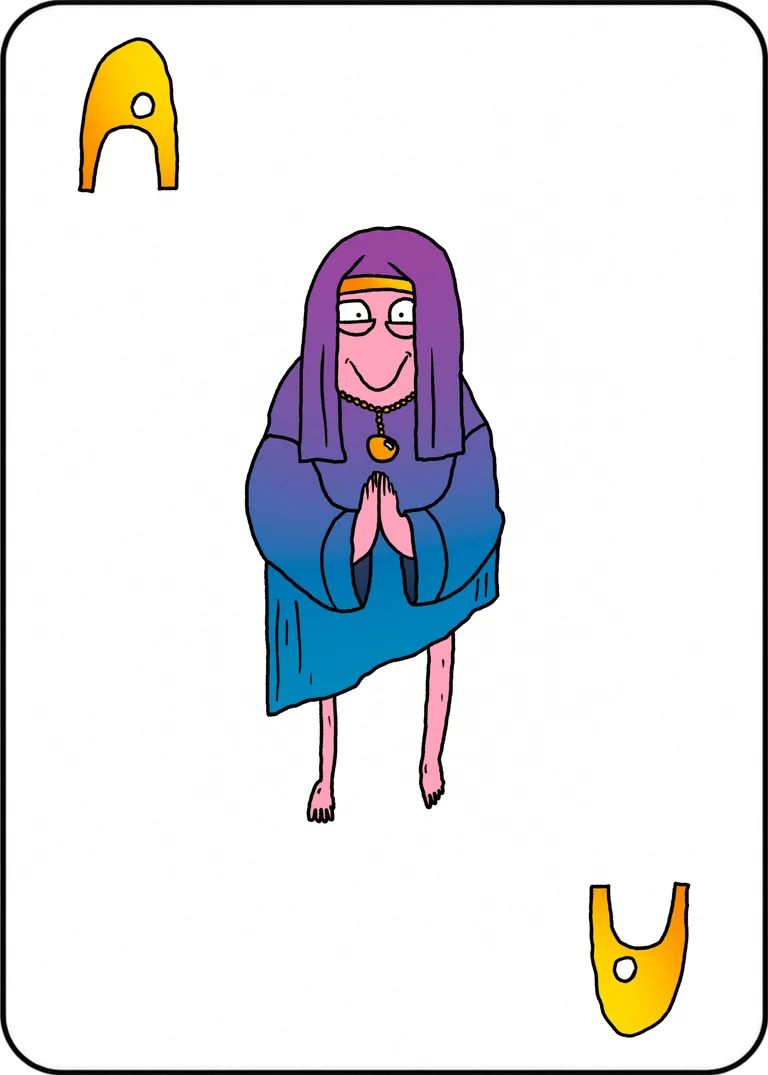
Ace
1 card, no color
When you throw it, you choose which card it counts as and in which color, for example a red Draw Two or a green Pass On. It is then that card in every way: it does what that card does, it follows the same rules, and the next player may not play its color. It cannot be Das Fundament, and it cannot be your last card.
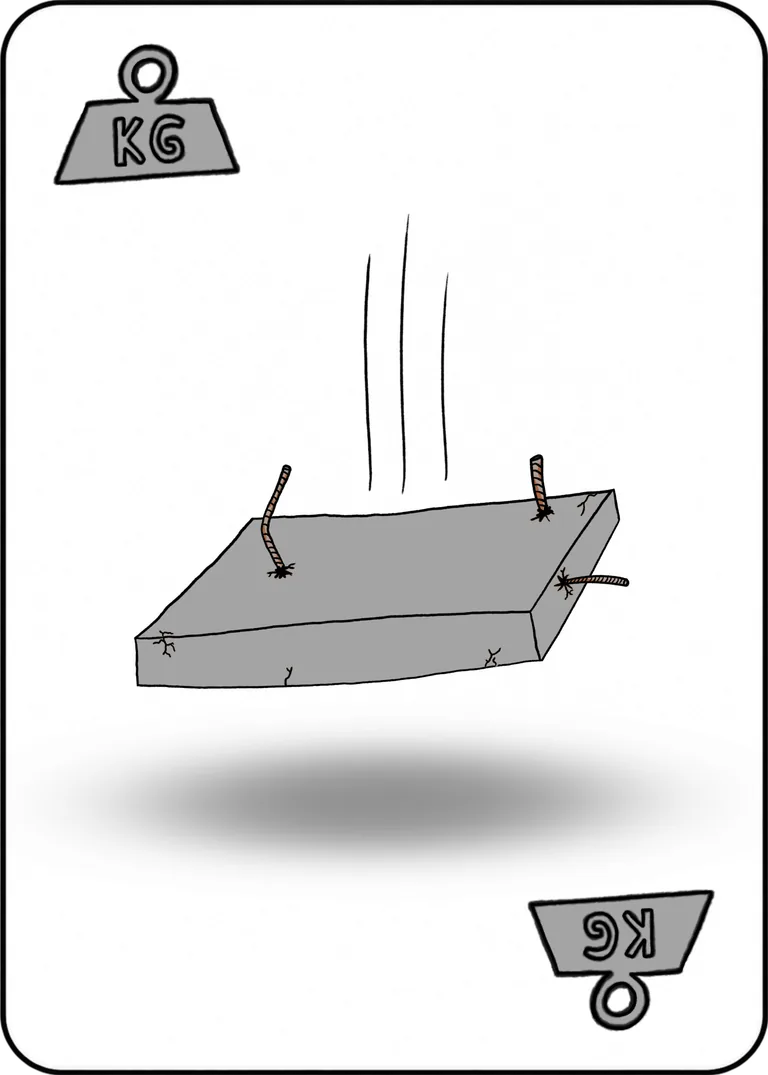
Das Fundament
1 card, no color
Stops any incoming attack except Skip, also after a Pass On. Whoever throws it may throw a second card on top of it. It fits on any color, and any color fits on it. It cannot be your last card.
A turn
Everyone is dealt the same number of cards; the rule sheet deals 6. The rest lies face down as the draw pile, and its top card is turned over to start the discard pile. What that first card says is ignored.
Play goes clockwise. On your turn you throw one card onto the discard pile, or you draw one card. After drawing you may still throw one card, or end your turn without throwing. One thing limits what you can throw: a card may never have the color of the card on top.
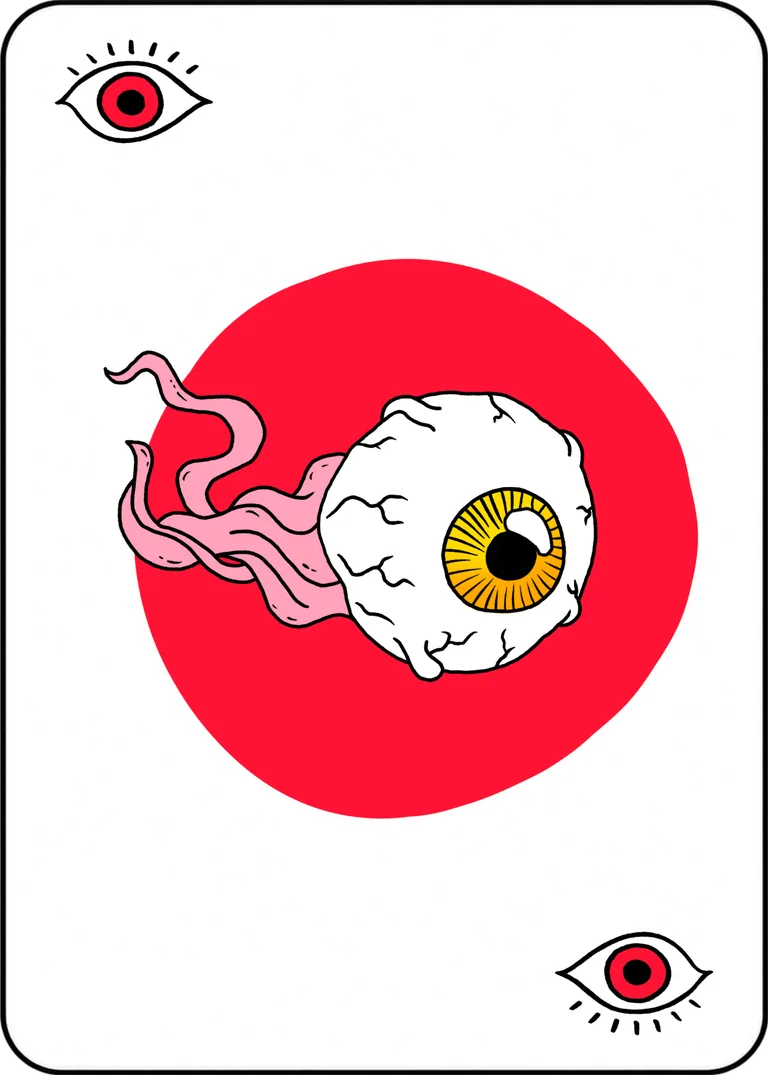
Red is on top
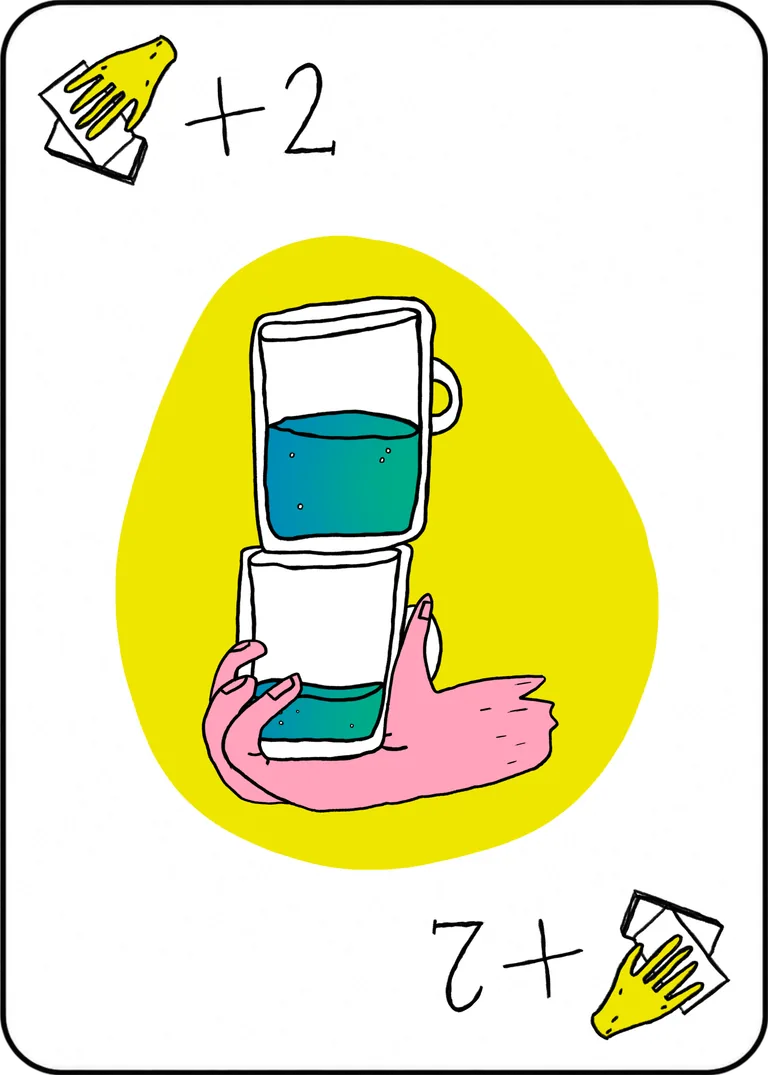 , can be thrown
- , has to stay
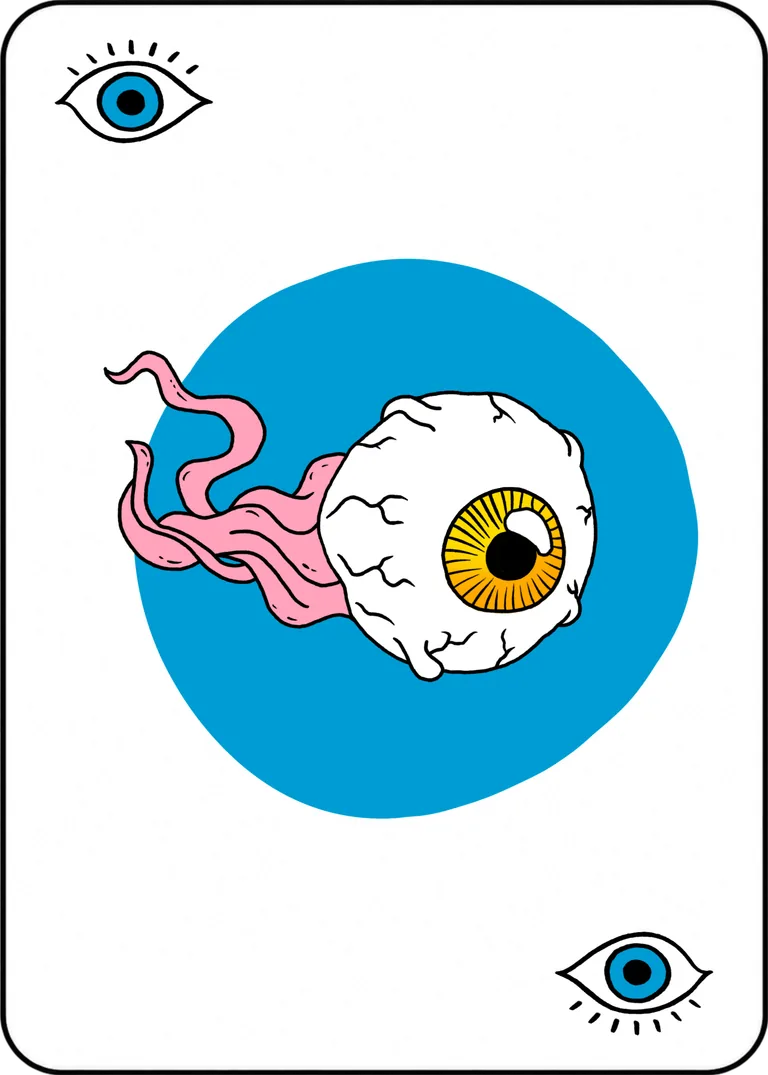 , has to stay
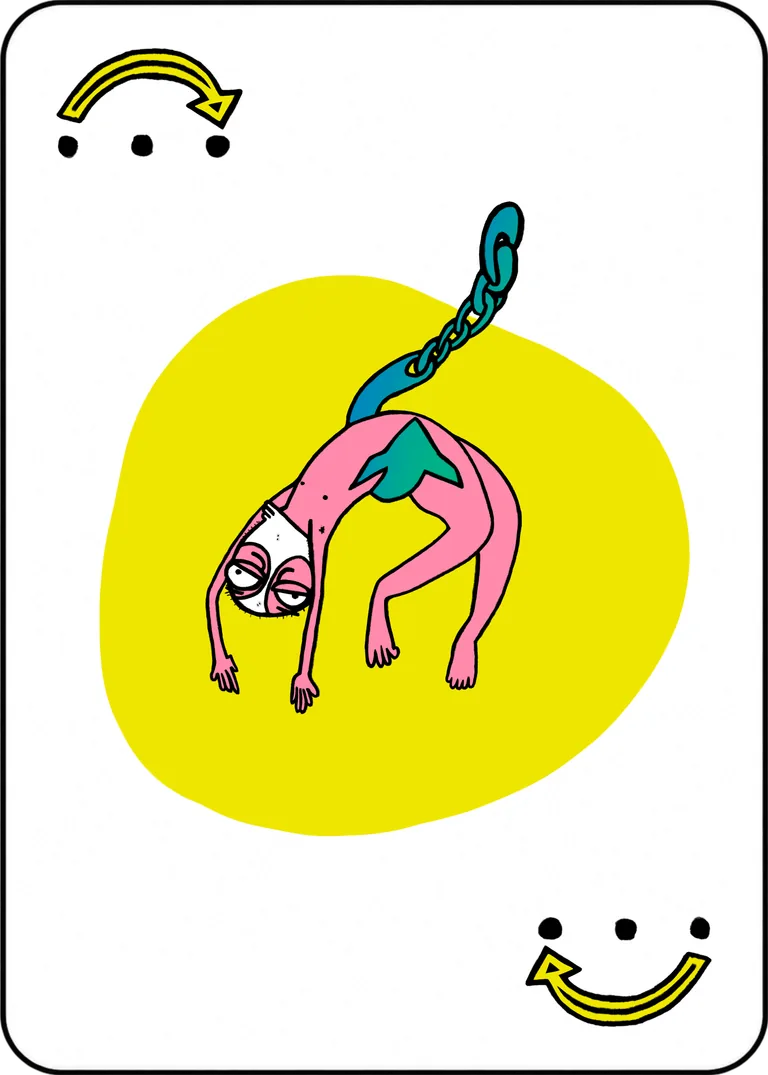 , can be thrown
- , can be thrown
 , can be thrown
When the draw pile runs out, the discard pile is shuffled into a new one, all but its top card. If there is nothing to draw at all, you have to throw a card that fits. Only without one may you pass.
Attacks
Draw, Take, Show and Skip are aimed at the player after you. That player does what the card says, or answers it. An answer is a card too, so the color rule still counts.
- The same card again passes the attack to the next player. Draw and Take cards add up on the way: a Draw Two answered with a Draw Two makes 4, a Take One answered with a Take One makes 2. Take cards are then taken from the player who threw the last one.
- Pass On forwards any attack as it is. On a Take attack the next player then takes from your hand. After it, the attack can only move on with another Pass On, or be stopped with Block or Das Fundament.
- Block cancels the attack, also one that came through a Pass On. It does not stop a Skip.
- Das Fundament stops every attack except a Skip, even one that came through a Pass On. You may then throw one more card on top of it, in any color. It cannot be your last card.
- The Ace counts as any of these cards, in any color but the one on top. You name both when you throw it, and it then does exactly what that card does. It cannot be Das Fundament, and it cannot be your last card.
Blue is on top
Draw 2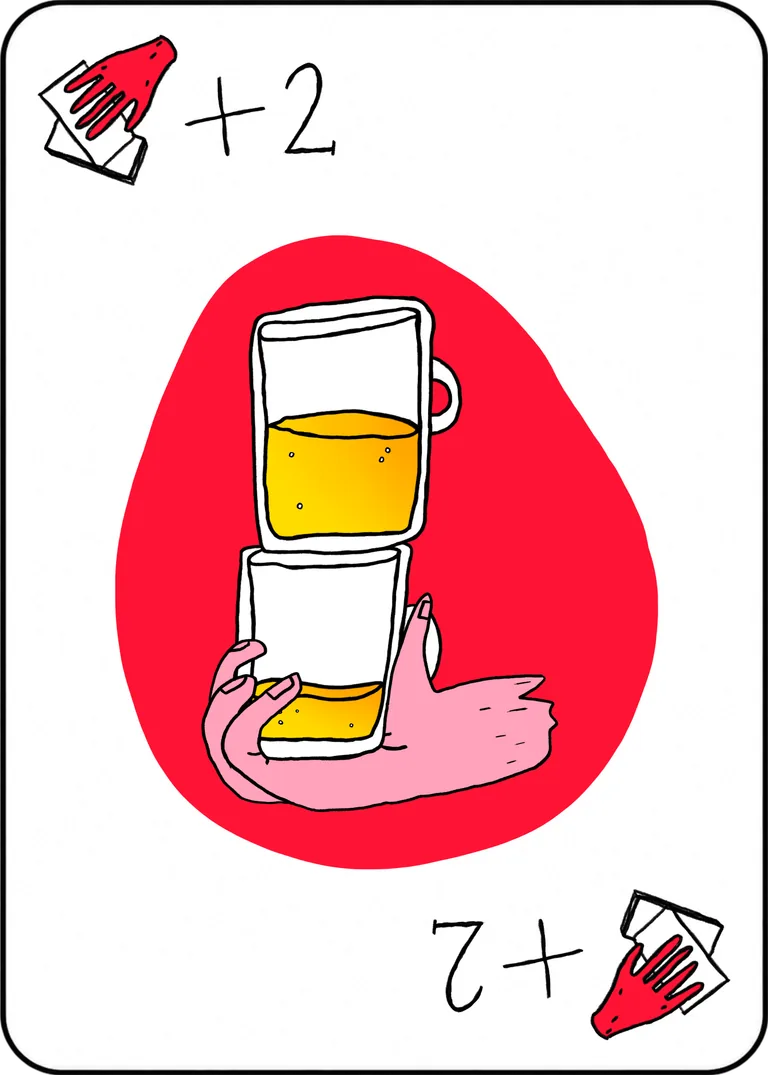 , can be thrown
 , has to stay
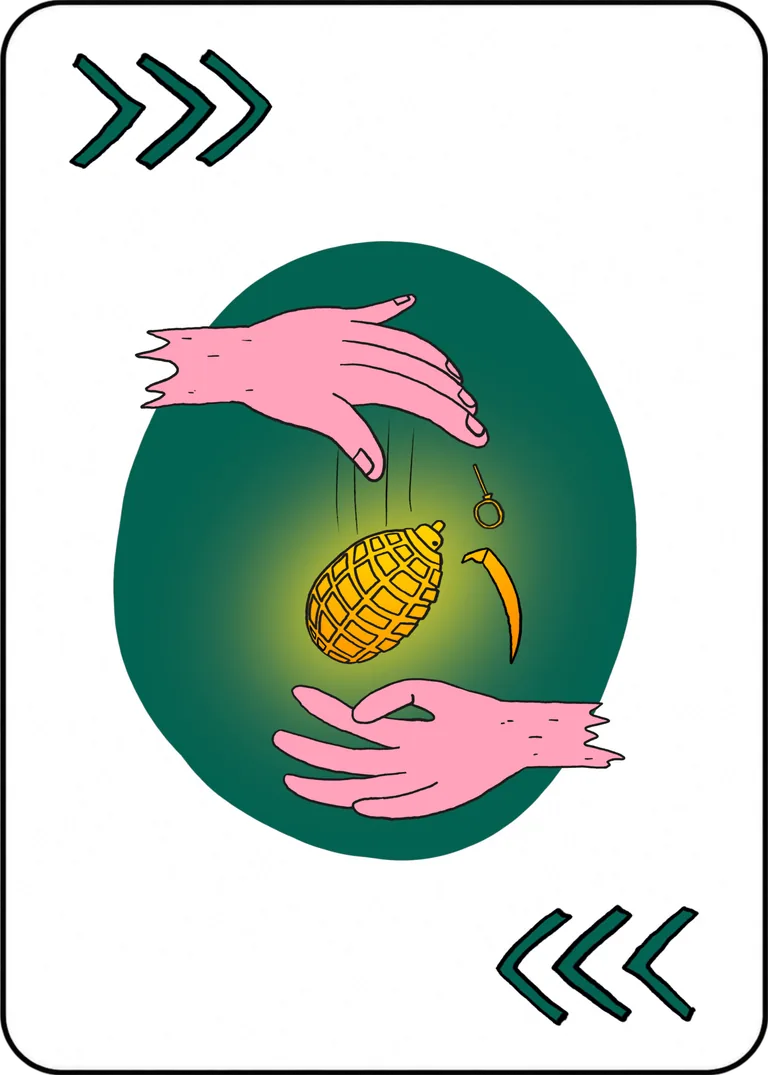 , can be thrown
- , has to stay
- , can be thrown
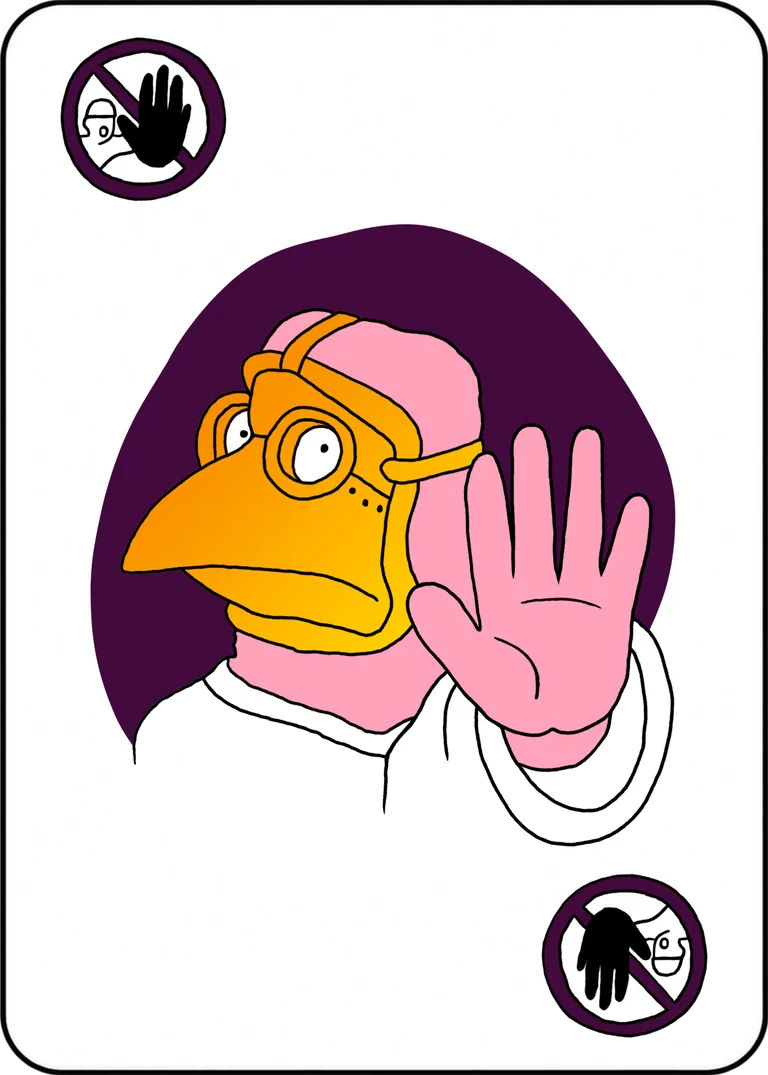 , can be thrown
- , can be thrown
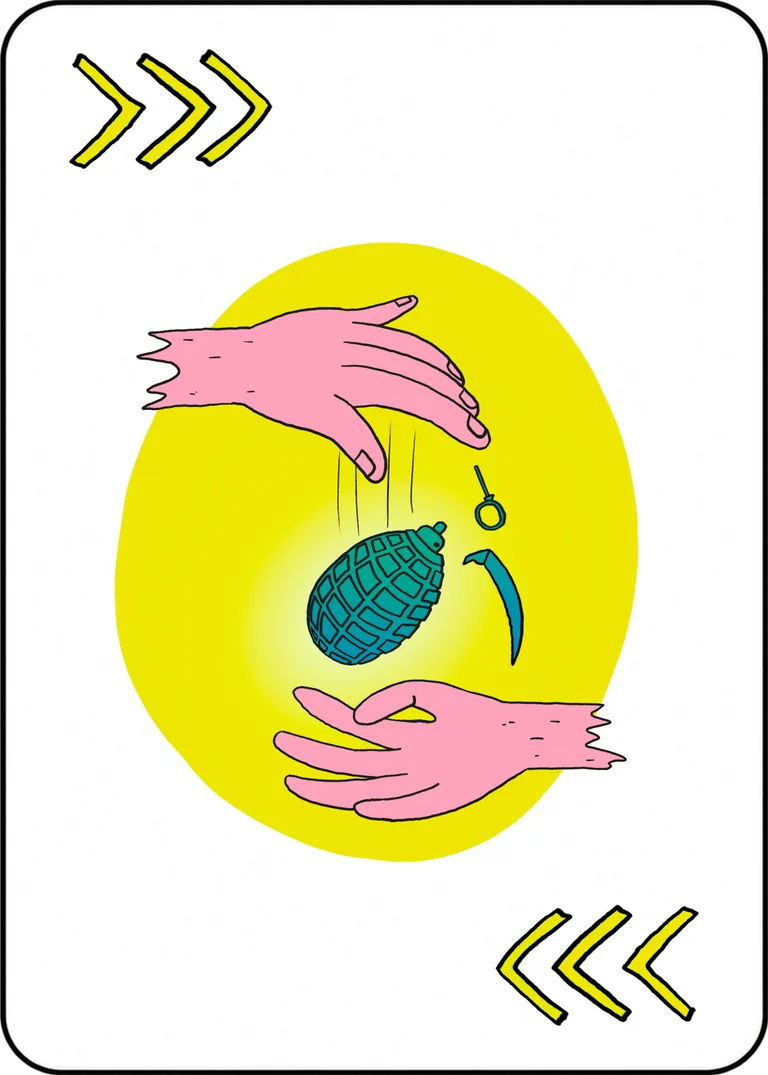
Yellow is on top
Draw 2, came through a Pass On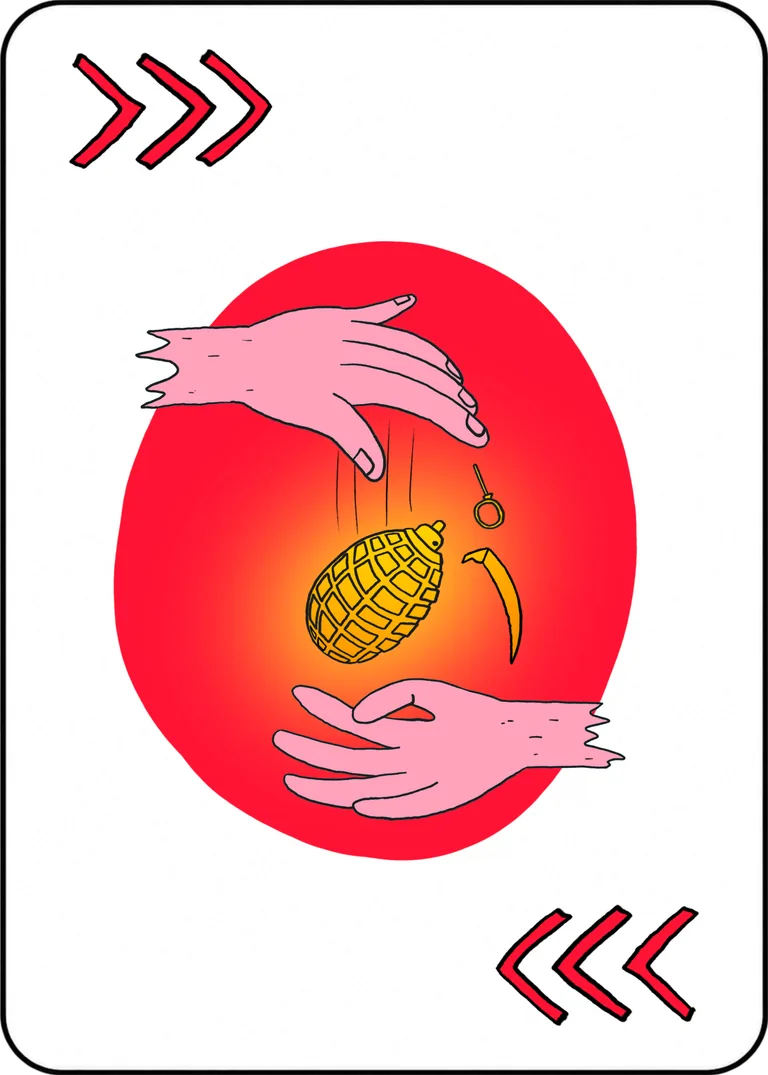 , can be thrown
- , has to stay
- , can be thrown
- , can be thrown
- , can be thrown
Whoever takes a Draw or a Take may still throw one card afterwards. Whoever takes a Show plays on as on any turn: throw a card, or draw one. Only a Skip ends the turn. Nothing answers a Skip: not another Skip, not a Pass On, not Block or Das Fundament.
Das Fundament stops every other attack. Throw it on one and the attack is gone. Your turn then goes on: throw one more card on top of it, in any color, or end your turn. Without an attack it does nothing but give you that second card.
The last card
Throwing your last card is not the end yet. If it is an attack, or an answer to one, the attack still has to land on somebody. While the others answer it, it keeps moving, and if it comes all the way round to you, you take it yourself and are back in the game, whatever the attack was.
Yellow is on top
Draw 2Finished unless it comes back
You have finished when your last card has landed on someone else, or when it carried no attack. If it comes back, you have not finished, even when it brings you no cards, like a Show or a Skip. After a Show you draw a card straight away, after a Skip on your next turn.
The Ace and Das Fundament can never be your last card. If one of them is all you hold, you draw instead, or take the attack, until you hold another card.
The first player to finish wins. The others play on and finish one by one, until a single player is left holding cards. That player loses.
Where the rule sheet is open
The sheet leaves 12 questions open. This is how they are answered here. Every answer can be switched when you set up a game or a run in the lab.
Play on until one loser is left
Stated by the designers: the game goes on until it is one against one and one of the two loses.
- Played here
- The first player to finish is the winner. The others keep playing and finish one by one. The game ends when a single player is left holding cards, the loser.
- The other reading
- The game ends as soon as the first player has finished.
Used-up card blocks its own type
If the function is depleted, the same type of card can't be played.
- Played here
- Once the top card's action is used up (attack taken or blocked, or the ignored starting card), the next card must be a different type as well as a different color. Skip is the exception: a Skip may follow a used-up Skip.
- The other reading
- Only the color rule applies. A fresh Draw Two may be played on a Draw Two that was already taken.
Block, Pass On and Das Fundament playable without an attack
The sheet only describes these cards as reactions and does not say whether they may be thrown otherwise.
- Played here
- They can be thrown on a normal turn with no effect, so they never get stuck in a hand. Das Fundament still lets you throw a second card.
- The other reading
- They can only be played against an incoming attack. A hand of only these cards cannot be finished without being attacked.
Skip can be passed on
Skip cannot be stacked. Block cancels any incoming attack except Skip.
- Played here
- A Skip always hits the next player. Nothing blocks it.
- The other reading
- A skipped player may answer with their own Skip or a Pass On. The following player is skipped instead. It never skips two players.
Take attacks take from whoever passed them on
Stated by the designers: if you pass on a Take Two that was thrown at you, the next player takes from your hand, not from the hand of the player who threw it.
- Played here
- Whoever passes a Take attack on, with the same Take card or a Pass On, is the one the next player takes from.
- The other reading
- Cards are always taken from the player who started the attack.
Block may answer a Pass On
Stated by the designers: Block also answers an attack that came through a Pass On. The sheet itself only names passing it on again or accepting it.
- Played here
- An attack that came through a Pass On can still be cancelled with Block, unless it is a Skip.
- The other reading
- After a Pass On the attack can only be forwarded again, stopped with Das Fundament, or accepted.
Picking up cards ends the turn
A player can also always choose to take the attack, or if no attack is going on, pick up a card from the pile and don't throw a card.
- Played here
- After taking an attack or drawing from the pile the player may still throw one card, or end the turn without throwing. A Skip always ends the turn.
- The other reading
- A player who takes an attack or draws from the pile throws no card in that turn.
Reshuffle the discard pile when the draw pile is empty
The sheet does not say what happens when the draw pile runs out.
- Played here
- All discarded cards except the top one are shuffled into a new draw pile as soon as somebody has to draw.
- The other reading
- Once the draw pile is empty nobody can draw any more.
An empty hand has always finished
The first player that has successfully thrown every card wins the game. If it eventually comes back to you, you are back in the game and must take the penalty instead of winning.
- Played here
- A player without cards has finished as soon as no attack is open. That includes a player whose last cards were taken by a Take attack. A player whose last card came back is back in the game either way.
- The other reading
- A player only finishes with a final card they threw themselves, and only if its action does not come back. A player left without cards in any other way stays in the game and has to draw.
Cards whose action cannot happen are unplayable
If the function is depleted, the same type of card can't be played. (Second possible reading of this sentence.)
- Played here
- Every card stays playable. A draw or take that cannot be served is simply void or partial.
- The other reading
- Draw cards cannot be played while nothing can be drawn, and a Take card cannot be played as the last card in hand because there is nothing to take.
Take attacks add up when passed on
Stated by the designers: a Take One answered with a Take One means the next player takes 2. The sheet only calls the Draw cards stacked and says that Take cards can be passed on.
- Played here
- A Take passed on with the same Take card adds up like a Draw card: Take One on Take One makes 2, Take Two on Take Two makes 4. A Pass On forwards it as it is.
- The other reading
- A Take keeps its number however often it is passed on: a Take One answered with a Take One still takes 1 card.
Taking a Show leaves a normal turn
Stated by the designers: whoever takes a Show and then throws no card has to draw one. The sheet treats taking an attack and drawing as the two ways to end a turn without throwing.
- Played here
- Whoever takes a Show then throws a card or draws one, as on any turn. Nobody can end the turn on a Show without either.
- The other reading
- Whoever takes a Show may still throw one card, or end the turn without drawing.
Not open to change
- When nothing can be drawn, a player who holds a card that fits has to throw it. Passing is only allowed with no card that fits.
- A game in which nobody can throw and nobody can draw is stuck and ends there.
- A game that is still running after the turn limit (3,000 turns unless changed) is stopped.
- A turn is one action by one player: throwing a card, drawing a card, or taking an attack.
- Cards taken with Take One or Take Two are picked at random. When you are the one taking, you pick from the other hand face down.
- Seats are numbered clockwise and Player 1 always starts, so the lab can show what starting is worth. In a game against the computer your seat is drawn at random.
The computer players
Every computer seat plays one of five styles. A mixed table gives each seat one of the last four at random. Those four play like experienced players: they save the Ace and Das Fundament for big attacks and the end of a hand, remember what was shown or taken from them, choose the cards they take, and try to stop anyone about to go out.
- Random
- Picks uniformly between every legal option, including drawing or taking the attack even when a card could be played. The Ace becomes any card it can be. A chaotic baseline that produces long games.
- Eager
- Throws whichever attack card fits, picked at random, and never holds one back for later. Answers an attack with whatever passes it on, a Show even with Pass On, and blocks only a costly one.
- Attacker
- Throws its strongest attack first: Take Two, then Take One, Draw Three and so on, and turns the Ace into a Take Two once it is down to four cards. Answers an attack by stacking the same card on it, otherwise with Pass On.
- Keeper
- Sheds Take, Show and Skip cards first and saves its Draw cards for a neighbor who is close to going out. Keeps Pass On for real attacks, takes the cheap ones, and with a full hand would rather take an attack than block it.
- Tactician
- Counts the cards: what was thrown, what was shown and what was taken from it, and from that how likely the next player can answer. Attacks hardest when an answer is unlikely, sheds its most common color first, and takes from a hand the cards it knows are worth having.
How the lab counts
- Overall score
- Up to 40 points for a typical game that lasts 5 to 15 minutes at 8 seconds a turn, up to 30 for seats that win and lose equally often, and up to 30 for games in which the players never end up holding every card. The sum is scaled by the share of games that finish. The minutes and seconds can be changed in the setup.
- Strength of a card
- The deal is random, so players who were dealt a card and players who were not differ only in that card. The difference between their win rates is what the card is worth in the starting hand. A difference smaller than its margin of error is shown as too close to call.
- Fastest possible win
- Found by searching every deal and every line of play for the earliest turn in which a player can have finished. Marked as proven when the search showed that no earlier turn is possible.
- Longest possible game
- There is none. A player may always draw instead of throwing a card, so a game can go on without end. The lab reports the longest game that was actually played.